Sen. Arreguín Introduces Resolution Recognizing Zero Textbook Cost Program That Saved CA Community College Students $33 Million Last Year
Student Textbook Affordability Snapshot highlights early student savings and the need for continued investment in free textbook pathways
SACRAMENTO — Today, Sen. Jesse Arreguín introduced a resolution on the Senate Floor recognizing the importance of California’s investment in Zero Textbook Cost degrees, as new data shows the program is already saving community college students tens of millions of dollars.
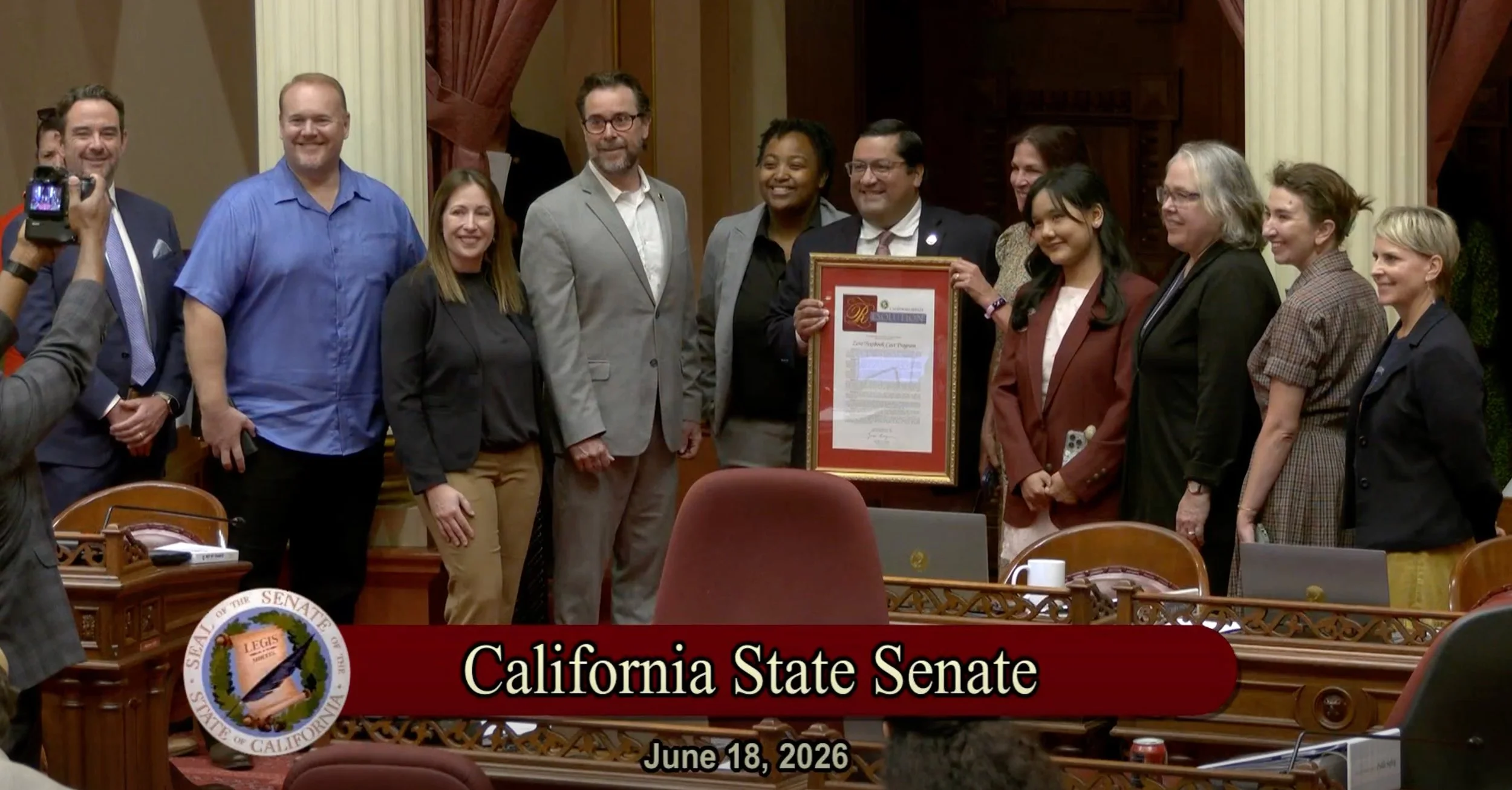
The resolution comes as findings from a new Student Textbook Affordability Snapshot show that California community college students saved an estimated $32.9 million during the 2024/2025 academic year through the state’s Zero Textbook Cost Degree Grant Program. The program reached 329,145 student enrollments across 11,503 grant-funded course sections, helping students avoid textbook costs at a time when housing, food, transportation, child care, and other basic costs continue to strain student budgets.
“California’s community college students should not have to choose between buying textbooks and paying for rent, food, transportation, or child care,” said Sen. Jesse Arreguín. “Textbook costs are a solvable affordability problem, and early results from the Zero Textbook Cost Degree Program show that this investment is already saving students real money. This resolution recognizes a proven affordability tool that deserves to be protected. At a time when the cost of living is putting extraordinary pressure on students, California should continue investing in solutions that help make it possible for students to take a full course load, stay enrolled, and complete their degrees.”
In 2021, Gov. Gavin Newsom and the California Legislature allocated $115 million for Zero Textbook Cost Degrees across the California Community Colleges. As a result, the program is on track to create more than 1,000 degrees and certificates that students can complete without spending money on textbooks.
“California’s investment in Zero Textbook Cost Degrees demonstrates what is possible when affordability and student success are addressed together,” said James Todd, Vice Chancellor of Academic Affairs for the California Community Colleges Chancellor’s Office. “By eliminating textbook costs, these pathways help students retain more of their financial resources, accelerate progress toward completion and transfer, and reduce the debt burden that can follow them after college. As the cost of living continues to rise, ZTC Degrees represent a proven strategy for expanding educational opportunity, strengthening workforce readiness, and supporting long-term economic mobility.”
The investment builds on the success of California’s earlier Zero Textbook Cost pilot program, which delivered more than a 700% return on investment. Based on results from that pilot, experts estimate the expanded program could save California students up to $800 million.
Zero Textbook Cost pathways use open educational resources and other no-cost instructional materials to reduce one of the few college costs that institutions can directly eliminate. For community college students, those savings can make it easier to enroll full time, stay enrolled, complete coursework, and progress toward a degree, certificate, transfer, or workforce credential.
“We are grateful to Sen. Arreguín for recognizing Zero Textbook Cost degrees as both a critical affordability intervention and a student success strategy,” said Cailyn Nagle, Open Educational Resources Senior Program Manager at Michelson 20MM. “For too long, students have been forced to navigate a course materials market that treats access to required learning materials as optional, even when those materials determine whether students can fully participate from day one. California’s ZTC program proves that we can change that system at scale, but sustaining that progress will require continued state investment in open educational resources, faculty innovation, and student-centered policies.”
Advocates, faculty, students, and California Community Colleges leaders are in Sacramento today to highlight the program’s early results and raise awareness of the role affordable course materials play in supporting student success across California as policymakers consider the future of higher-education investments.
###
Michelson Center for Public Policy (MCPP) is a Los Angeles-based 501(c)(4) nonprofit advocacy organization affiliated with Michelson Philanthropies, a foundation devoted to expanding equity and access across medical research, animal welfare, education, and intellectual property. MCPP advances policy and legislative solutions that support these priorities. In collaboration with policymakers, advocacy organizations, and civic leaders, it works to expand opportunity for underserved communities across California and beyond. Learn more at michelsonpolicy.org.
Michelson 20MM is an operating division of Michelson Philanthropies, a Los Angeles-based 501(c)(3) foundation. Michelson 20MM advances initiatives focused on open educational resources, student basic needs, smart justice, and digital equity to expand access to education and economic opportunity. Its work prioritizes underserved students, including those attending community colleges and individuals impacted by the criminal justice system. Learn more at 20mm.org.